One Door, Many Paths
Trellis’ Chief Operating Officers on the support that helps people thrive
Trellis grew out of two organizations with powerful legacies. Together, our combined experience has created a century of impact for Calgarians.
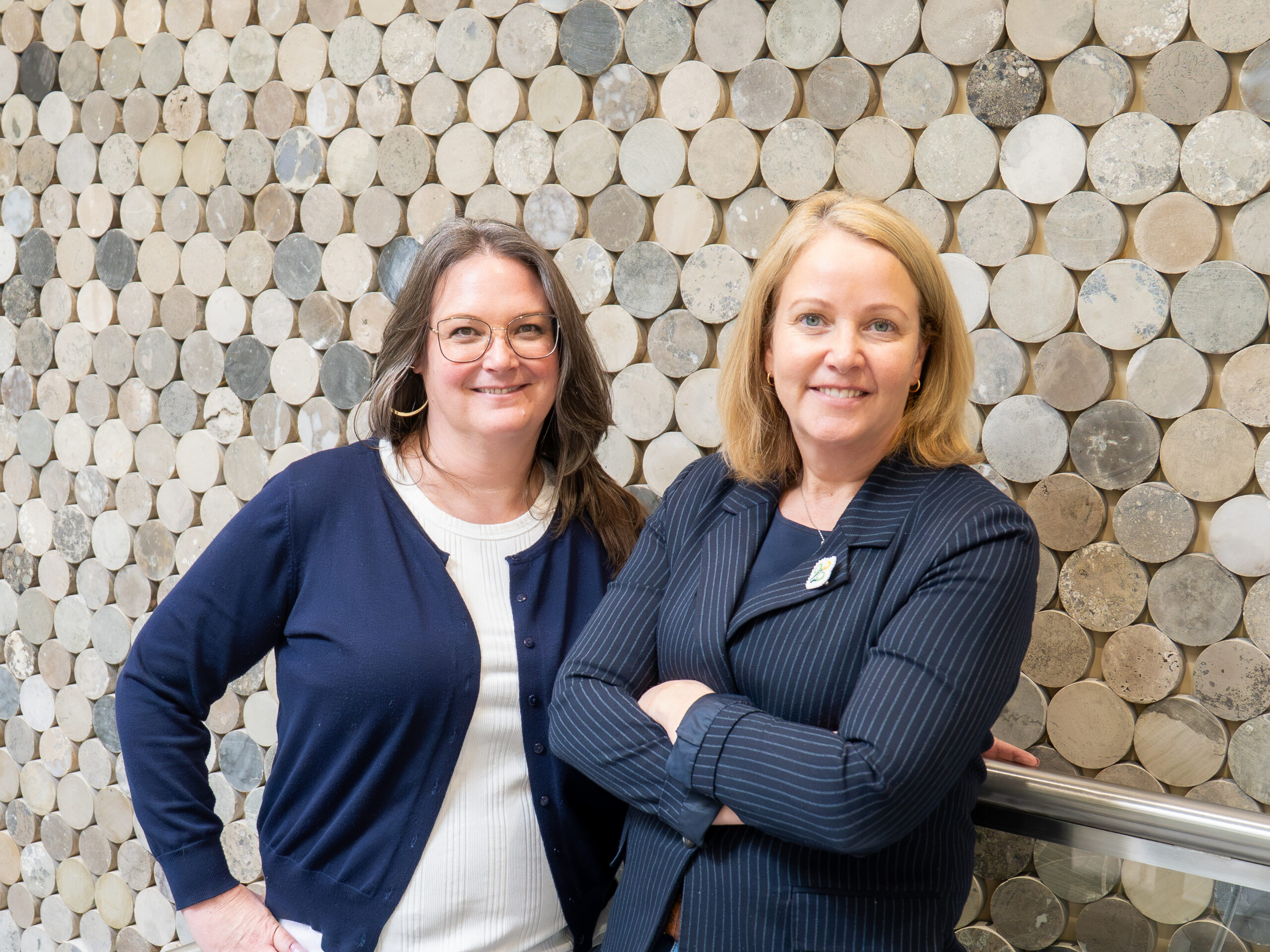
Our legacy organizations also brought us our two Chief Operating Officers. Kim Ledene, Chief Operating Officer, Housing, spent many years working at Boys and Girls Club of Calgary in areas including group homes, foster care and housing. Courtenay Hick, Chief Operating Officer, Community Wellness, started her career at Aspen Family and Community Network Society, where she worked in group homes, in community development, and with families facing homelessness.
We sat down with Kim and Courtenay to get their perspective on what the people we serve are struggling with, the unique ways we’re supporting them, and the power of Trellis’ One Door approach.
What are some of the biggest challenges our clients are currently facing?
Kim: Affordability is a huge challenge. Our clients are often dealing with complex issues like addiction,
mental health struggles and intergenerational trauma, so when that is combined with the rising
cost of living it becomes even harder for them to make ends meet.
Courtenay: Lack of community and connection to other people is another big challenge. People have their
nuclear family, and they don’t often reach out beyond that.
Kim: With technology, people don’t have to leave their house to be connected. I don’t know if we
understand the impact of that yet.
Courtenay: In the past, we had a lot more opportunities to practice talking to strangers, whether that was calling for pizza, or talking to our friend’s parent on the phone or answering the door when someone showed up on our front step. Now a lot of that has gone online, so there’s no practice for how to interact and develop those relationships. That feels like a big problem and contributes to our lack of community and connection.
There’s nothing worse than finding the courage to ask for help, only to be told that you have to go somewhere else in order to get it. Having the time and capacity to tell our story multiple times is a luxury, one that many of the people we serve don’t have. On top of the many pressures of daily life, they may not have a flexible job, childcare or a reliable means of transportation, so every stop along their way adds a barrier to getting the help they need.
Our goal with One Door is to create an experience where our clients aren’t giving up before they reach someone who can hear them and help them. Someone may be calling because they need help with housing, but we hear that they need childcare. We hear that they’re underemployed, so we connect them to our employment team. We hear that they’d benefit from clinical support, so we bring in our therapy team. People are calling about their most pressing need, but we can listen and identify other things they’re struggling with as well. This way, they can access multiple types of support through a single conversation.
Kim: It comes back to the power of only having to tell your story once. People can talk to the Trellis staff member they’re most comfortable with, and they might end up getting support from multiple different programs without even knowing it. The client might not even know what’s happening in the background, they just know they’ve found someone they trust, they’ve built a relationship with them, and that person is helping to ensure their needs are being met.
For example, a parent and their family might come to our Bowness Hub and talk to our Hub manager about what they’re struggling with. Then, behind the scenes, the Hub manager can work with staff on other Trellis teams to coordinate access to the support that family needs. They leave saying, “I just dropped into the hub and chatted with the staff at my child’s after school program, and then got help to stabilize my housing, I got access to therapy, and my oldest is getting help with graduating from high school.” We want to create that one-stop feeling for Trellis clients and make it as easy as possible for them to get the support they need to thrive.
Why the work we do at our hub so essentials?
Courtenay: If you support someone in community early on, before their problems get big, you can keep them out of a homeless shelter. If somebody comes to us at one of our hubs saying, “I’m going to lose my housing,” we can investigate. We can explore temporary rent subsidies, help them budget in a different way or connect them with resources to find a better paying job. Small things like this can add up and help keep someone out of the cycle of homelessness.
Kim: Relationships are often the conduit for change. Often, the people we work with have had experience with being let down, whether it’s by professionals or by friends and family. At our hubs, we can build trusting relationships where people can feel safe to ask for help.
Courtenay: When we’ve built a solid relationship with a client, sometimes we can offer help without them having to ask for it. We can get curious and give space for people to talk about what they’re going through. When people have the chance to get to know us over time, in a more casual environment like our hubs, asking for help doesn’t feel so scary.